Camaraderie: The Handwritten Font That Feels Like a Conversation
There's a particular warmth to handwritten text that digital type often struggles to capture. It's the slight imperfection, the organic flow, the sense that a human hand actually moved across the page. Camaraderie, a sweet and slightly quirky handwritten font, manages to bottle that feeling beautifully. Its natural, unique style makes it incredibly versatile—you'll find yourself reaching for it across a surprisingly wide range of projects. The only real limit is your imagination.
Understanding Camaraderie's Personality
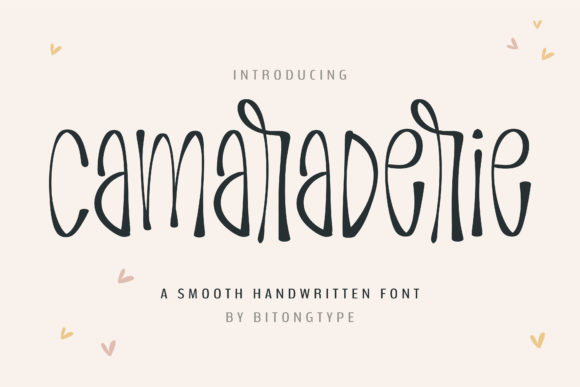
Camaraderie isn't trying to be a formal calligraphy script or a perfectly polished serif. It sits in that delightful middle ground—approachable, friendly, and full of character without being overwhelming. The letterforms have a gentle bounce, with varying stroke widths that mimic the natural pressure of a pen or marker. This gives it an authentic, handmade quality that feels genuine rather than contrived.
What makes it particularly effective is its balance. Some handwritten fonts sacrifice readability for style, becoming so decorative that they're only usable at large sizes for short headlines. Camaraderie maintains clarity even at moderate sizes, making it functional for more than just display text. The quirky details—maybe a slightly unusual letter connection or a playful terminal—add personality without sacrificing legibility. It's the typographic equivalent of a friendly, expressive voice that's still easy to understand.
Where This Font Truly Shines
The versatility of Camaraderie is where its value really becomes apparent. Think about the projects where you need to inject personality and warmth without looking unprofessional or childish.
Brand Identity & Logo Design: For small businesses, especially those in creative fields, wellness, food, boutique retail, or personal services, Camaraderie can become a cornerstone of brand identity. Imagine a bakery using it for its logo and packaging—the font immediately communicates handmade care and artisanal quality. A yoga studio might use it for its wordmark to convey approachability and mindfulness. It works beautifully as a primary display font for logos, especially when paired with a clean, neutral sans-serif for body copy.
Packaging & Product Design: On physical products, this handwritten font can differentiate your item on a crowded shelf. It's perfect for product names, flavor descriptions, or "made with love" taglines on labels, boxes, or tags. The organic feel aligns perfectly with natural, organic, or handcrafted product lines.
Social Media & Digital Marketing: In the fast-scrolling world of social media, a font with personality stops thumbs. Use Camaraderie for Instagram quote graphics, Facebook ad headlines, Pinterest pins, or YouTube thumbnails. It adds a human touch that can make your content feel more relatable and engaging compared to the sea of standard geometric fonts. It's particularly effective for creating a cohesive look across your social media graphics, reinforcing brand recognition.
Websites & Blogs: While you wouldn't set your entire blog post in it, Camaraderie is fantastic for website headers, pull quotes, section titles, or call-to-action buttons. It can break up the monotony of standard web-safe fonts and give your site a distinct personality. For a personal blog, using it for your blog title or category names can make the entire experience feel more intimate and author-driven.
Print & Editorial Design: Think beyond digital. This font is excellent for designing wedding invitations, greeting cards, event posters, or workshop flyers. In editorial layouts, like a magazine or a cookbook, it can be used for chapter titles, recipe names, or sidebar callouts to add visual interest and a human element. It bridges the gap between formal editorial design and a more personal, accessible feel.
Merchandise & Physical Goods: T-shirts, mugs, tote bags, stickers—merchandise often relies on typography that feels personal and expressive. Camaraderie fits this niche perfectly. Its handwritten style looks authentic when printed on fabric or ceramic, avoiding the stiff, digital look some fonts can have.
Making It Work: Practical Typography Advice
Having a great font is one thing; using it effectively is another. Here’s how to get the most out of Camaraderie and similar creative fonts.
Font Pairing is Key: Camaraderie has a strong personality, so it needs a quiet partner. Pair it with a simple, highly readable serif or sans-serif font for body text. A classic combination might be Camaraderie for headlines with a font like Lato, Open Sans, or a clean serif like Merriweather for paragraphs. This creates contrast and hierarchy, ensuring your design is both beautiful and functional. Test your pairings at different sizes to make sure they harmonize.
Prioritize Readability: Always consider context. A handwritten font like this is perfect for a headline on a poster viewed from a few feet away, but might be harder to read as the main text in a lengthy email or a dense report. Use it where its charm can be appreciated without causing eye strain. For digital projects, check how it renders on different screens and devices.
Explore the Included Styles: A quality premium font often comes with more than just the basic uppercase and lowercase. Look for what’s included with Camaraderie. Does it have stylistic alternates, ligatures, or a full set of punctuation and symbols? Using these features can add even more flair and uniqueness to your designs. A stylistic alternate for a particular letter might give you just the right custom look for a logo.
Understand the Licensing: This is a crucial, often overlooked step. If you're using Camaraderie for a commercial project—whether it's client work, your own business branding, or merchandise for sale—you need to ensure you have the correct commercial license. Most reputable font marketplaces offer different license tiers (desktop, webfont, app, etc.). Purchasing the right license protects you legally and supports the font designer who created this valuable asset.
Beyond the Font: Building a Visual Language
Ultimately, a typeface like Camaraderie is more than just a collection of letters. It's a tool for communication and connection. When used thoughtfully, it can help build visual consistency across all your touchpoints, from your website to your business cards to your social media feeds. This consistency is what builds brand recognition. Your audience starts to associate that specific, friendly handwritten style with your business, creating a memorable and cohesive identity.
It also plays a role in professional presentation. Choosing a well-crafted, unique font over a default system font signals that you care about details. It shows intentionality in your design, which can subtly influence how your audience perceives the quality of your product or service. And perhaps most importantly, it boosts engagement. A design that feels human, approachable, and visually interesting is simply more likely to connect with people than one that feels generic and cold.
So, whether you're crafting a new brand from scratch, refreshing your social media presence, designing a line of products, or simply looking for a typeface that feels more "you," give Camaraderie a serious look. Download it, experiment with it, and see how its sweet, quirky personality can transform your next project from simply informative to genuinely engaging. The right font doesn't just display words; it helps tell your story.