Simple Rainbow: Bringing Joyful Bounce to Your Creative Projects
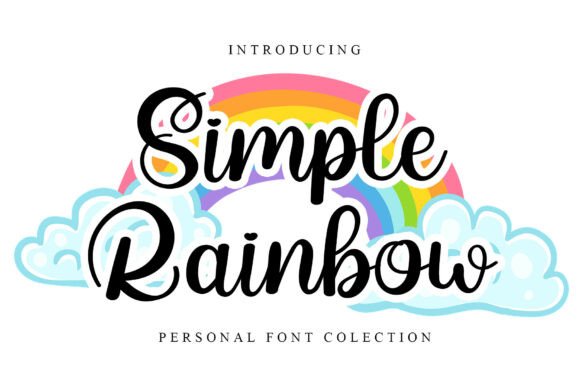
There's a particular kind of magic that happens when typography stops being just letters on a page and starts feeling like an emotion. You know the feeling—it's that moment when you see a font and immediately think of sunshine, birthday candles, or a child's laughter. That's exactly the energy Simple Rainbow brings to the table. This whimsical bouncy script font doesn't just display words; it performs them, turning every letter into a small celebration that dances across your design with infectious enthusiasm.
What Makes a Bouncy Script Font Feel So Captivating?
Simple Rainbow earns its name honestly. The letterforms move with an organic, slightly uneven rhythm that mimics natural handwriting—think of a joyful note scrawled on a chalkboard or the playful labels on a homemade jam jar. Each character bounces gently along the baseline, creating a sense of movement and personality that static, rigid fonts simply cannot replicate. The strokes carry a hand-lettered warmth, with varying thicknesses that give the typeface depth and character without sacrificing legibility.
What sets this particular script font apart from other display fonts in the market is its balance. Many playful typefaces sacrifice readability for personality, or they lean so heavily into "cute" territory that they become impractical for anything beyond a single headline. Simple Rainbow threads the needle beautifully. It maintains enough structure in each letterform to remain clear at moderate sizes, while still delivering that unmistakable bounce and whimsy that makes people pause and smile.
Where Creative Professionals Actually Use Fonts Like This
Let's get practical. You're probably reading this because you have a specific project in mind, or you're building out a font library that serves real commercial needs. Here's where a whimsical bouncy script font like Simple Rainbow genuinely earns its place in your design assets collection.
Children's Products and Baby Brands: If you design nursery wall art, baby shower invitations, or custom apparel for little ones, this font speaks directly to that audience. The letterforms feel approachable and safe—exactly the emotional tone parents respond to when shopping for their children. Pair it with soft pastels or primary brights, and you've got instant brand recognition in the children's market.
Bakery and Sweet Shop Branding: Cupcake bakeries, candy shops, ice cream parlors, and dessert-focused food trucks all benefit from typography that feels indulgent and fun. Simple Rainbow works beautifully on packaging design for sweet treats, menu boards, loyalty cards, and social media posts announcing daily specials. The bouncy quality practically tastes like frosting.
Social Media Content Creation: Content creators working in lifestyle, parenting, food, or crafting niches constantly need fresh typography for Instagram stories, Pinterest pins, and TikTok overlays. A font with this much personality helps graphics stand out in crowded feeds without requiring elaborate design compositions. Drop Simple Rainbow onto a solid-colored background with a simple message, and you have an engaging post ready in minutes.
Event Invitations and Stationery: Birthday parties, baby showers, christenings, quinceañeras, and graduation celebrations all call for invitation typography that feels festive without being overly formal. This script font handles those moments gracefully, whether you're designing digital invitations through Canva or preparing files for professional printing.
Small Business Marketing Materials: Entrepreneurs selling handmade goods at craft fairs, on Etsy, or through local boutiques often struggle to find commercial fonts that feel authentic and artisan without looking amateur. Simple Rainbow fills that gap for businesses in the kids' products, baked goods, handmade crafts, and gift industries. Think hang tags, thank-you cards, packaging labels, and promotional flyers.
Pairing Simple Rainbow with Other Typefaces
One of the most common mistakes designers make with display fonts and script fonts is using them for everything. Simple Rainbow shines brightest when it plays a supporting—or starring—role alongside complementary typefaces. Here are some pairing strategies that work in practice.
With a Clean Sans Serif: Combine Simple Rainbow for headlines and subheads with a straightforward sans serif font for body text and details. This creates a clear hierarchy where the whimsical script draws attention, while the sans serif handles information-heavy content like dates, addresses, and product descriptions. Think Open Sans, Lato, or Poppins underneath those bouncy headlines.
With a Classic Serif: For projects that need to feel a bit more grounded—like editorial design for a parenting magazine or packaging for a premium children's product—pairing the script with a traditional serif font adds sophistication. The contrast between the playful headline and the structured body copy creates visual interest without chaos.
With Another Handwritten Font: If your brand identity leans heavily into the handmade aesthetic, you might pair Simple Rainbow with a more subdued handwritten font or a rough sans serif with organic edges. The key is ensuring enough contrast in weight, size, or style so the two fonts don't compete for attention.
Always test your font pairings at the actual sizes they'll appear in your final design. A combination that looks balanced on a large monitor might feel cluttered on a business card or illegible on a mobile screen.
Practical Considerations Before You Commit
Before integrating any premium font into your workflow, a few practical checks will save you headaches down the road.
Review the Full Character Set: Open the font in your preferred design software and explore every included glyph. Does it offer alternates, ligatures, or swashes that add variety? Simple Rainbow's bouncy character benefits from these extras because they prevent repetitive letter patterns that can make script fonts look mechanical. Check for multilingual support if you serve international audiences.
Test Across Sizes: Script fonts and handwritten fonts behave differently at various scales. Set Simple Rainbow at the size you'll actually use it—whether that's a 72-point headline on a poster or a 24-point subhead on a website—and evaluate readability honestly. If certain letter combinations blur together, adjust your tracking or choose a different size.
Understand the License: Commercial fonts come with specific licensing terms that dictate how you can use them. If you're creating products for sale, client work, or merchandise, verify that the license covers those applications. Most premium font licenses distinguish between personal and commercial use, and some restrict usage on print-on-demand platforms or mass-produced goods. Read the fine print before launching a product line featuring the font.
Consider Your Color Palette: Bouncy script fonts like Simple Rainbow tend to pair best with warm, inviting color palettes—think coral, mint, sunshine yellow, lavender, and soft teal. That said, the font also works in monochromatic schemes or against bold, saturated backgrounds. Test your font in context with your brand colors to ensure the overall mood aligns with your message.
Building a Brand Identity Around Whimsical Typography
For small business owners and entrepreneurs, choosing a typeface isn't just an aesthetic decision—it's a strategic one. Typography communicates your brand's personality before a customer reads a single word. When Simple Rainbow appears consistently across your website headers, social media graphics, packaging, and marketing materials, it creates a recognizable visual thread that customers begin associing with your business.
This is particularly valuable for brands targeting families, children, or the gift market. The bouncy, joyful quality of the font signals warmth, creativity, and approachability—qualities that build trust with parents shopping for their kids or friends searching for the perfect handmade gift. Over time, that consistent typographic presence becomes part of your brand identity, working silently in the background to reinforce recognition every time someone encounters your work.
The trick is restraint. Use Simple Rainbow strategically for headlines, logos, and accent text rather than saturating every surface with it. Let the font do what it does best—capture attention and convey emotion—while more neutral typefaces handle the heavy lifting of body copy and detailed information. That balance between personality and professionalism is where great design lives, and where a font like this truly proves its value in your creative toolkit.