Wicked Brush: When Your Design Needs a Little Darkness
There are times when a design calls for something clean, precise, and friendly. And then there are times when it needs to feel raw, mysterious, and a little unsettling. If you’ve ever worked on a project for a haunted attraction, a heavy metal band’s merch, or a Halloween-themed event, you know the struggle of finding a typeface that doesn’t just look spooky, but feels genuinely wicked. That’s where a tool like the Wicked Brush font steps in, offering a solution that’s less about technical perfection and more about visceral, atmospheric impact.
The Anatomy of an Eerie Typeface
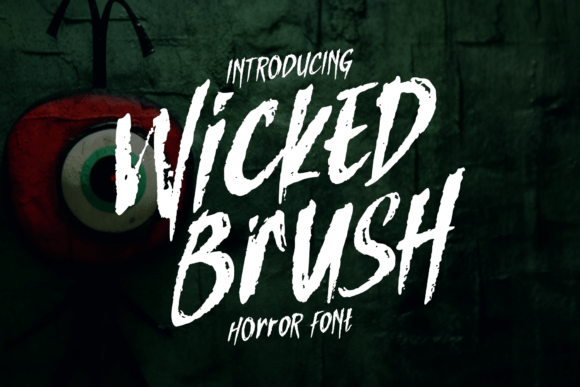
So, what exactly makes a font feel “wicked”? It’s not just about jagged edges or dripping letters, though those can be part of it. The real character comes from texture and inconsistency. The Wicked Brush typeface is built on a foundation of rough, hand-painted strokes. Imagine dipping a stiff brush into thick black paint and scrawling a letter with a shaky, uncertain hand. The paint clings unevenly to the bristles, leaving behind a trail that’s both bold and fragile. That’s the core visual language here. Each glyph carries the imperfection of its creation, making the entire word feel like it was written under duress or with a dark, magical intent.
This style is a far cry from the crisp geometry of a modern sans serif font or the elegant flow of a classic script font. It’s a display font, meaning it’s designed for headlines and short bursts of text where personality is paramount, not for long paragraphs where readability is king. The sharp, rough-hewn lines create a high-contrast look that grabs attention instantly. It’s the kind of typeface that doesn’t just sit on a page; it seems to move, to breathe, and to tell a story all on its own.
Where This Font Truly Shines: Practical Applications
Understanding the font’s personality is one thing, but knowing where to deploy it is where the real value lies for a designer or business owner. This isn’t a universal tool, but in the right context, it’s incredibly powerful.
- Branding for Niche Markets: If your brand identity is rooted in alternative culture, the supernatural, or a gritty, urban aesthetic, this typeface can become a cornerstone of your visual language. Think logos for escape rooms, tattoo studios, or indie game developers specializing in horror.
- Packaging & Merchandise: A Halloween-themed craft beer, a limited-edition horror novel, or band merchandise for a metal or punk group—these are perfect scenarios. The font adds an immediate layer of authenticity and attitude that connects with a specific audience.
- Event Collateral: For a haunted house fundraiser, a gothic wedding invitation, or a mysterious murder mystery dinner party, using Wicked Brush on posters, tickets, and menus sets the tone before the event even begins. It acts as a visual promise of the experience to come.
- Digital Presence: Used sparingly, it can make a website header or a social media graphic for a podcast about true crime or urban legends stand out in a crowded feed. It’s a tool for creating immediate, thumb-stopping intrigue.
The key is intentionality. Slapping this font onto a children’s birthday party invitation would be a mismatch of epic proportions. But when the project’s goal is to evoke fear, mystery, rebellion, or the occult, it becomes an essential part of your design assets.
Making It Work: Pairing and Readability
A font this expressive demands careful handling. Its power can quickly become a weakness if overused or paired incorrectly. Here’s some practical advice for integrating it effectively.
Font Pairing is Everything. Never set a full paragraph in a brush display font like this—it would be a nightmare to read. The solution is to pair it with a neutral, highly readable typeface. A simple sans serif font like Helvetica, Arial, or a clean grotesque for body text creates a perfect counterbalance. The contrast allows the Wicked Brush headline to deliver its atmospheric punch while the supporting text remains clear and functional. This pairing is a fundamental principle of modern typography that ensures both style and substance.
Context Dictates Size. Use it large. This is a headline font, a logo font, a title font. Its intricate details and texture get lost when reduced to small sizes, turning it into an unreadable smudge. Let it command space and attention.
Consider Your Color Palette. The font’s inherent darkness works best with high-contrast backgrounds. Stark white, deep crimson, or eerie green can amplify its effect. A busy, colorful background will compete with its texture and diminish its impact.
Leverage the Included Features. A premium font like this often comes with more than just the standard alphabet. Look for stylistic alternates (different versions of certain letters) and ligatures (special combined characters like "fi" or "fl"). These extras can help you customize the look and avoid repetitive letterforms, making your text feel even more hand-crafted and unique.
A Tool for a Specific Job
In the vast world of typefaces, every font is a specialized tool. You wouldn’t use a wrench to hammer a nail. The Wicked Brush font is your wrench for projects that need to feel gritty, handmade, and steeped in a particular kind of dark magic. Its value isn’t in universal application but in its ability to instantly communicate a complex mood—unease, mystery, raw power—that other, more sanitized fonts cannot.
Before you commit, always test it in the context of your full design. See how it interacts with your images, colors, and other typographic elements. Ensure it aligns with the commercial licensing for your project’s needs, whether for a personal blog or a global marketing campaign. When used with a clear vision and a skilled hand, it doesn’t just write words; it casts a spell.